
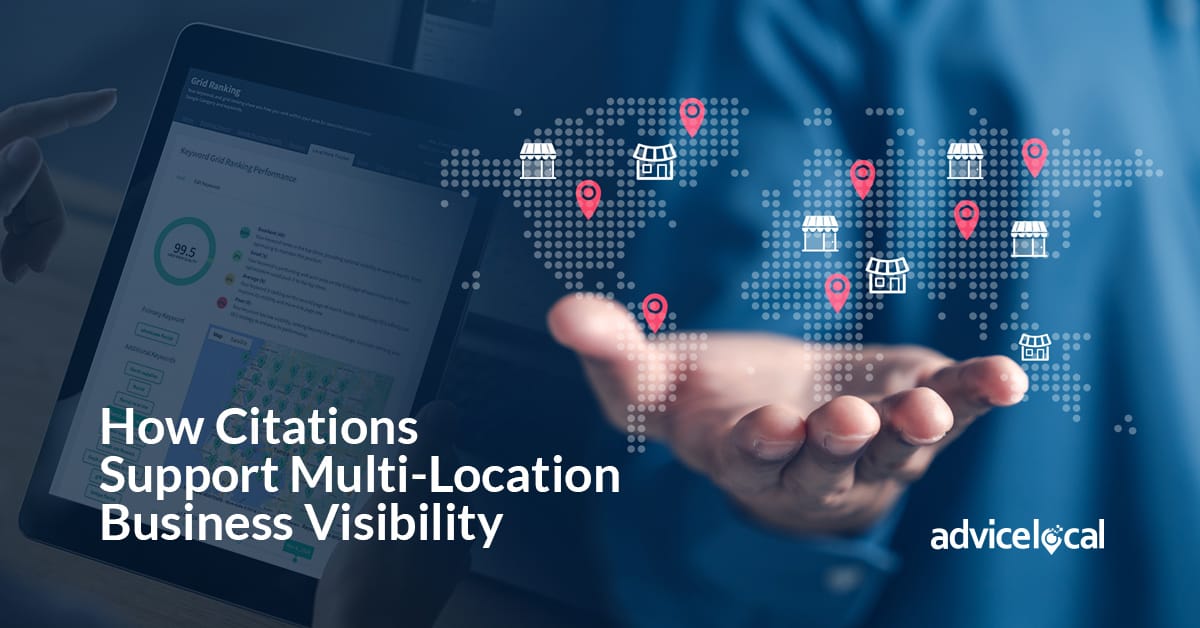
For a single location, managing business listings across directories and search engines requires accuracy and consistency. When that effort scales to enterprise brands, franchises and agencies overseeing dozens or hundreds of locations, the complexity grows significantly. Search engines, maps and AI platforms treat each location as a distinct entity while also connecting it to the broader brand. For multi-location businesses, how agencies manage citations directly impacts whether the business gets found.
Why Local SEO Is Different for Multi-Location Brands
Multi-location brands face a difficult balancing act. Each business location needs to represent the brand using consistent imagery, logos and descriptions, while also keeping its own unique address, phone number, hours, categories and services. Managing that tension between brand uniformity and location-specific data is where listing management makes a difference.
When citation data is mismanaged, incorrect details and similar business names can cause confusion for both search engines and customers. That confusion affects how prominently a business appears in search results and on maps. As location counts grow, keeping listings updated manually becomes far more difficult.
How Search Engines Distinguish Multi-Location Businesses
To understand a business location, search engines pull citation data from directories, maps and other platforms. Each listing helps define a business entity by its name, address and phone number (NAP). When that data is accurate and consistent across sources, search engines can identify and surface the correct branch for a relevant search.
Visit Advice Local to [read more].


