
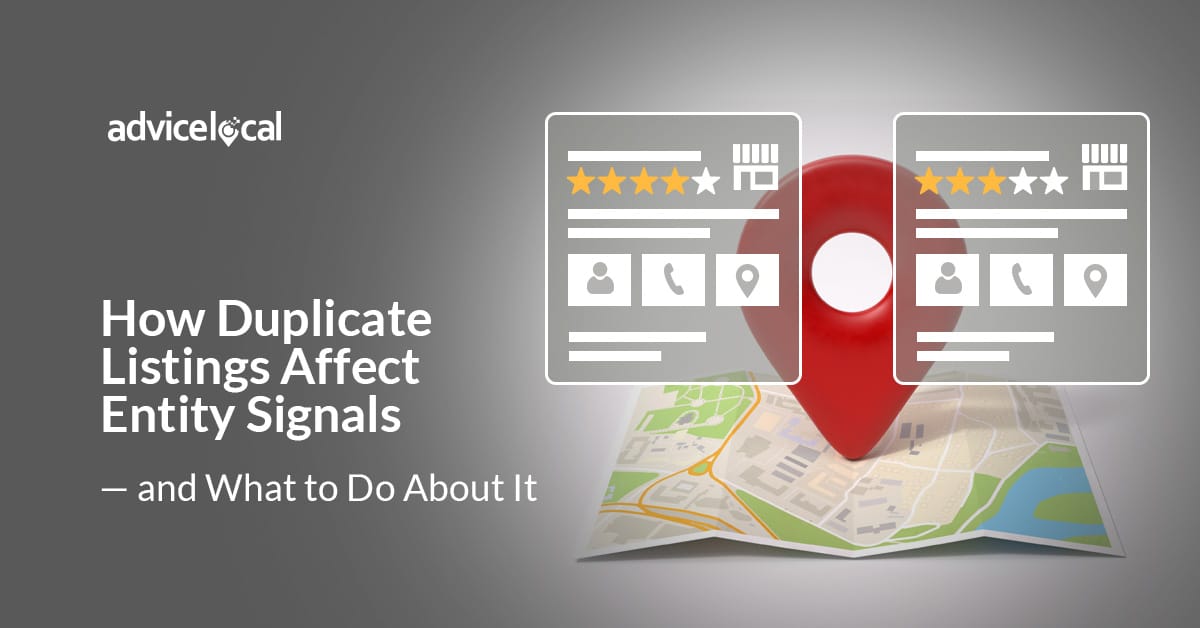
For agencies and local marketers, local citations and listing management help keep business data accurate and consistent across search platforms, directories and maps. That consistency is foundational to how search engines understand and rank a business through entity signals. But what happens when duplicate listings appear? Today we’re looking at how duplicate listings weaken entity signals, and what that means for visibility in local and AI-powered search results.
How Conflicting Listings Weaken Entity Signals
As a refresher, entity signals are the data points that help search engines identify, verify and define a business in search results. These signals include directory listings, NAP (name, address and phone number) consistency, schema markup, Google Business Profile data, citations and brand mentions across the web. Search engines rely on consistency from trusted sources to validate that entity, and when those signals conflict, that authority begins to erode.
1. NAP Inconsistencies Reduce Search Confidence
Duplicate listings have many causes. A business moves or rebrands, data aggregators automatically generate new entries, or users create profiles on sites like Google Maps. Unfortunately, even small variations in NAP data can create conflicting signals. Faced with competing listings, search engines can lose confidence in understanding which version to trust. When citation data matches across trusted platforms, it helps Google and AI verify business legitimacy and build entity authority. You could think of every trusted source as adding weight to that business.
2. Duplicate Listings Split Review Signals
User reviews on Google Business Profile, Yelp and other platforms deliver strong trust signals to users and search engines. When duplicate listings exist, these reviews risk being split across competing profiles. The ideal is to have a single accurate listing with a consistent flow of high-quality reviews, as the appearance of duplicate listings will absolutely make a business appear less credible.
Visit Advice Local to [read more].


